What would you do if you were on vacation, taking a bicycle tour through a forest and would find this?
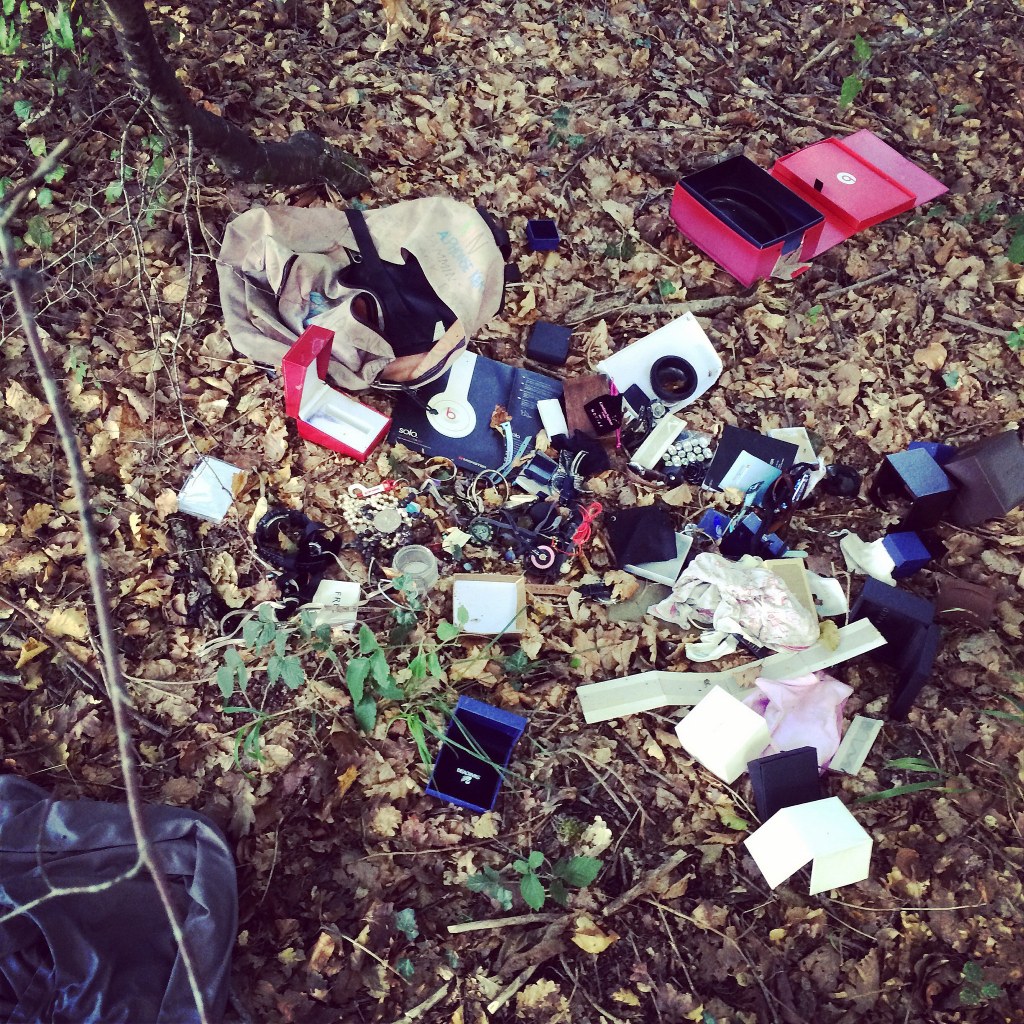
So it happened to me today. What I found about 10 meters next to a path through a forest near Fontainebleau in France were bracelets, watches, rings and packaging from Cartier, Swarovski or Beats, for example – probably the left over of a burglary, obviously the most valuable things gone.
So, what would you do?
What I did: After a second of imagination if things like a G-Shock from Casio laying there would suit me well, I took some pictures and a Google-Maps-Screenshot of the place of discovery …
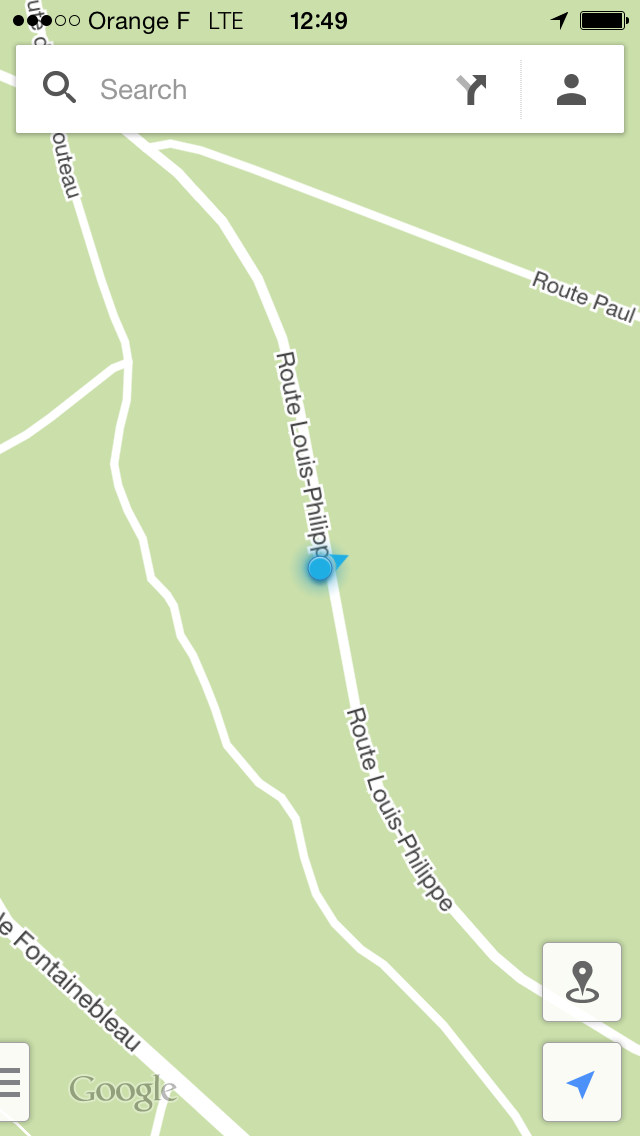
… and looked up the nearest police station (in doing so I’ve learned that there are two police systems in France: the National Gendarmerie and the National Police).

Arrived at the police station I tried to express my concern …. and failed.
A green, locked door, some signs I couldn’t read (I don’t speak french), no chance to meet anybody in real and an intercom system (photo below). I pressed the button … and currently listened to some french march music, obviously I was on hold. Than somebody spoke to me what I didn’t understand, I asked, “Do you speak English?”. “No”, was the short and only answer I got, followed by a busy signal. Combating crime finished – without starting!
So much to say on the subject of customer friendliness of monopolies – in this case of the state monopoly on the use of force! I guess at this point there is no big difference between France and Germany, where I live.

Which brings me to Germany and a study called “What are the costs of crime? … and what part of it can be avoided by fighting crime?” I wrote about some days ago (both only in german).

There it is said that theft in Germany declined from 4.1 million in 1993 to 2.4 million in 2011. Burglaries are less often, namely about 150.000 a year. Detection rate: 15 Percent. I have an idea why the police isn’t more successful…
Follow the Pixeloekonom on Facebook, Twitter, Instagram, Google+ or subscribe via RSS.

 Pixelökonom